Weirs and Locks on The River Thames in England.
Huge violent weirs controlled by equally huge sluices to small quiet weirs some still controlled by Paddle and Rymer - The River Thames has them all.
There are several particularly impressive weirs on The River Thames - perhaps the best example is the weir at Hambleden - The Thames is fairly wide there and the weir is staggered across the water rather than straight across.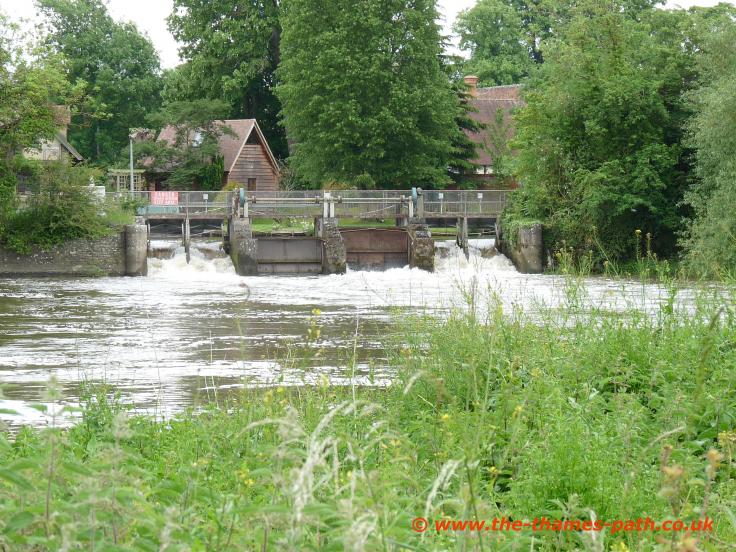 You can walk right across Hambleden's weir and whilst doing so you get a feel of really being amongst the action of the river especially if there is plenty of water flowing.
Another extremely impressive weir is located at Teddington - this weir also dog-legs it's way across the River Thames and of course at Teddington there are also the three sets of locks - including The River Thame's largest. The most violent water activity at a weir we have seen is the that found next to Abingdon Lock - the River Thames there is fairly narrow and Abingdon's weir goes almost straight across - after heavy rain the force of the water going through the sluices makes the whole structure shudder. Originally weirs were constructed by mill owners to create enough force to power their paddles - these weirs were
constructed by placing stones and boulders on the river bed and holding them in place with interwoven wooden stakes and mesh. Fishermen also took advantage of this blockade because they could easily net the eels during the migration which occurs during May and June. Before locks were introduced on the river these weirs created quite a headache for boats - if going downstream the boats waited for a head of water
to be created and then part of the weir would be removed and the boats would be "flashed" through the gap - boats heading upstream had to be pulled through manually. This breaking of the weir obviously took the flow away from the mills each time boats needed to pass through so boatmen and mill owners were not exactly the best of friends.
You can walk right across Hambleden's weir and whilst doing so you get a feel of really being amongst the action of the river especially if there is plenty of water flowing.
Another extremely impressive weir is located at Teddington - this weir also dog-legs it's way across the River Thames and of course at Teddington there are also the three sets of locks - including The River Thame's largest. The most violent water activity at a weir we have seen is the that found next to Abingdon Lock - the River Thames there is fairly narrow and Abingdon's weir goes almost straight across - after heavy rain the force of the water going through the sluices makes the whole structure shudder. Originally weirs were constructed by mill owners to create enough force to power their paddles - these weirs were
constructed by placing stones and boulders on the river bed and holding them in place with interwoven wooden stakes and mesh. Fishermen also took advantage of this blockade because they could easily net the eels during the migration which occurs during May and June. Before locks were introduced on the river these weirs created quite a headache for boats - if going downstream the boats waited for a head of water
to be created and then part of the weir would be removed and the boats would be "flashed" through the gap - boats heading upstream had to be pulled through manually. This breaking of the weir obviously took the flow away from the mills each time boats needed to pass through so boatmen and mill owners were not exactly the best of friends.In many cases the weirs are situated close to the various Thames Locks and these days provide two particular functions:
The lock gates will always be closed at one end of the lock or the other and obviously the river's water has to go somewhere and the weir provides an escape route,
Secondly although The Thames is not tidal (it's subject to tides from Teddington out to the North Sea only) the volume of water in the river and the rate of flow changes all the time. This can occur for instance after heavy rain fall so the weirs have to be quite wide to cope and sometimes are staggered across the river rather than built straight across to allow for more volume control.
 The water authorities can control the river's height over most of the length of The Thames and where necessary restrict water flow.
This is achieved by raising or lowering the paddles on the weirs - perhaps allowing the river to go over it's banks into water meadows in some locations upstream and protect more sensitive areas from flooding elsewhere.
Equally if there is a shortage of water perhaps during a drought the weirs are used to maintain a certain depth of water in shallower parts of the river.
The water authorities can control the river's height over most of the length of The Thames and where necessary restrict water flow.
This is achieved by raising or lowering the paddles on the weirs - perhaps allowing the river to go over it's banks into water meadows in some locations upstream and protect more sensitive areas from flooding elsewhere.
Equally if there is a shortage of water perhaps during a drought the weirs are used to maintain a certain depth of water in shallower parts of the river.The following are photos of some of the Locks and Weirs which can be found on The River Thames - starting up at the River's first and highest lock at Lechlade and heading South - plus there are several photos of one of the few remaining active Paddle and Rymer Weirs which is located at Northmoor Lock in Oxfordshire.
Access to the Weirs on the River Thames:
in some cases it is possible to walk right onto the weirs and in fact cross the Thames on them such as Marsh Weir outside of Henley, at Benson and at Hambleden. This is because the weirs are parts of public rights of way (footpaths) or form part of the route of a National Trail such as the Thames Path. Where we beleive you can at least get onto a weir the name of it is marked in green - (although even access to these weirs may be stopped temporarily for various "waterways" or perhaps safety reasons).[ Clicking the thumbnails will open a much larger picture - use the back button to return to this page. ]

Lechlade - St Johns Lock

St Johns Weir
and Bridge

Lechlade - St Johns Weir

Buscott Lock

Buscott Weir

Grafton Lock and Weir

Radcot Lock

Radcot Weir

Rushey Weir

Shifford Lock

Northmoor Weir

Northmoor Weir
The River Thames and Northmoor Weir which is operated by the Paddle and Rymer System.
The control of weirs by the Paddle and Rymer method has been in evidence on the River Thames since the 13th Century and is certainly part of our heritage. The paddles are fairly long posts with flat peices of wood or these days fibreglass (or rymers) attached to them - these can be dropped into a wooden cradle on the river bed and therefore block the water flow. Northmoor is one of the few remaining weirs on the River Thames which operates this system (others are at Streatley and Iffley weirs) - most weirs are now mechanical affairs. The Environmental Agency is currently destroying the paddles at Rushey's weir and is now attempting to be allowed to destroy the system at Northmoor. This should not be permitted - the Government and it's Quango is a disgrace.
Paddles working at Northmoor Lock

Northmoor Lock

Northmoor
Paddle + Rymer Weir

Pinkhill Weir

Swinford Weir

Kings Lock

Kings Lock Weir

Kings Lock

Godstow Lock

Godstow Weir

Sandford Lasher

Sandford lock

Abingdon Weir

Abingdon Weir

Sutton Pool + Weir

Sutton Courtenay Weir
There are various locations along the route of the River Thames where the weirs are a considerable distance away from the locks> For instance the Thames just outside of Culham enjoys one of it's frequent loops and Clifton Cut was constructed
in 1809 along with Culham lock near to Culham Bridge. The weirs themselves are actually across a water meadow from the lock at the edge of Sutton Courtney where there was once a paper mill - prior to the construction of Culham Cut the Mill owners used to charge heavy tolls for transitting river traffic.
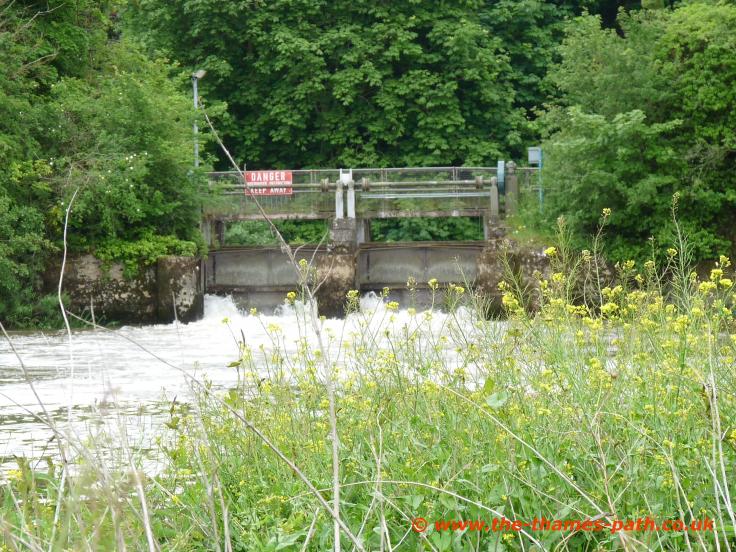
Sutton Weir

Clifton Cut Weir

Clifton Lock and Weir

Clifton Lock
The remaining pictures and information about The River Thames and it's Locks, Weirs and Barrages from Days Lock on into London continues on our Weirs and River Thames Locks - Days Lock to Richmond Lock in England page.
- Please also take a look at our related items:
- Old Thames Bridges over the River Thames between Lechlade and Whitchurch
- Bridges crossing The River Thames between Caversham and Tower Bridge in London
- River Thames Locks and Weirs between Benson and Richmond
- How to use the Locks on The River Thames in England
Our The Thames Path towpath Walks in England Home Page lists all our topics about walking along the Thames Path from Lechlade through to the end of the Path at the Thames Barrage. .
Via our Site Resources find links to more items about England - canals include The Grand Union Canal, The Kennet and Avon Canal, The Regents Canal, the River Lee Navigation and The River Stort and The Stratford-upon-Avon Canal.
You can contact us via the above The Resources item. You may also like to read our Cookies and Privacy Policy.